 |
| Vachellia and Senegallia species in massed flower near Longido, Jan 2012 |
Friday, 3 February 2012
Butterfly migration update
Thanks to all who've given me information so far! Numbers are definitly falling now around here, but some big waves are still coming through and that big wave of movement must be headed somewhere else... If you've been following you'll notice that new points have been appearing on the map, though more would be great, so if you've been hesitant, please do let me know. You can either add points yourself here, email or SMS me (if you know my number of course) or add a comment to the blog and I'll update things. I'm just as keen on negative data as positve ones if you're in the area - I'm getting hints that there's nothing moving in southern Tarangire, for instance, but only because I've been asking folk there and they've all been silent! Similarly, I think it's negative all over Serengeti, but I'm struggling for people to tell me that despite sending lots of messages!
Some things I've been wondering about that might help us piece things together include information on average flight speeds for butterflies of other species - around 14kmh for Monarchs, butteflies that like a little tail wind. And between 10kmh and 6kmh for a range of other species in still air (higher speeds usually by migrant species, but not specifically recorded on migration). When our African Monarchs are on the move they seem to travel at about the same speed as the whites and they use a following breeze too, so let's assume a similar flight speed. Now I first noticed movements in Arusha on Tuesday, but it could have started sooner. Most movement has been between 10am and 5pm, giving 7 hrs of movement time. And most of the butterflies haven't been stopping much to feed. So let's say each individual has been moving for 7hrs on three days, they should have covered nearly 300km in that time. My most easterly records of the movement on the map (did I say to help me fill it in?!) are from Korogwe on Wednesday, when a notiable movement was headed NW - not as many as elsewhere at that time, but I don't know what it was like there on Tuesday or Monday. So those eastern butterflies are around 300km from me, if they followed the direction of movement we've been recording. If they flew each day, they'd be passing here about now. It's tempting to think the lower numbers at the moment represent the end of a continouos movement from Korogwe to here, whilst the peak that was here should no be about 300km further along, takingus beyond Eyasi and into uncharted territoriy. Anyone know folk in Singida or out that way who might tell us what they've seen?

Wednesday, 1 February 2012
Mapping the butterfly eruption
OK, I got rather a lot of information thanks to the previous post and thought we'd cash in on it as fast as possible - the butterflies are moving again over Ilboru right now, not in large numbers yet, but it's still cool. I think I've created a google map that anyone can edit with their location and observations. It's not a polished item, but I've put what I've discovered in for far and it's already interesting. (If anyone tech-savvy can make it neater I'd love to have icons that reflected the direction and volume of movement, rather than just pins...) If we get lots of observations on this it will definitely make a note for some lepidoptera publication and we'll have pushed back the frontiers of science, which would be great!
View Butterfly eruption 2012 in a larger map
So, instructions....
View Butterfly eruption 2012 in a larger map
So, instructions....
Butterfly migration out now!
 |
| African Caper White Belenois aurota |
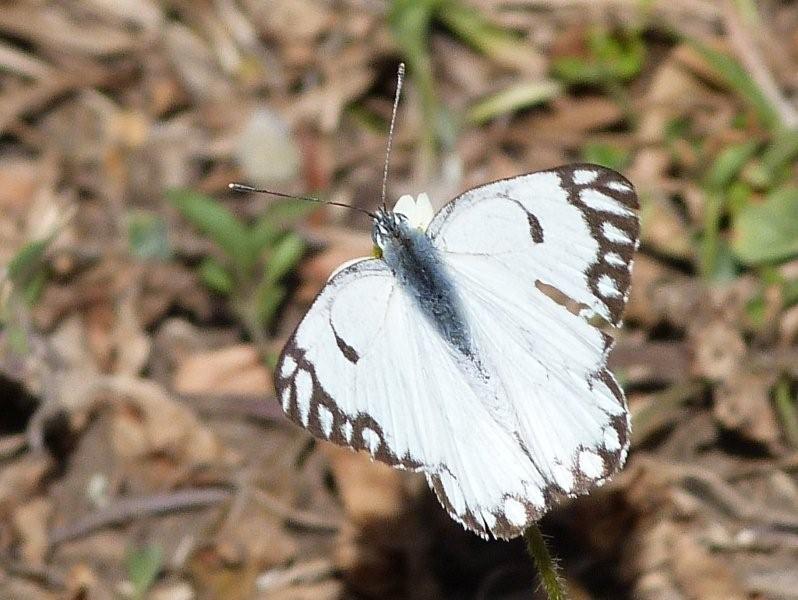 |
| Beleonis creona African Common White |
Tuesday, 31 January 2012
A few things you (probably) didn't know about weaver ants
 Ants aren't usually the first things people look at when on safari, but they are fascinating beasts when looked at up close. We briefly featured siafu here once before, but that's not enough for a really important group of invertebrates, and it's time to rectify that. Finding I had some nice pictures of Weaver Ants Oecophylla longinoda (right) I thought they might make a good start as they're not only fairly common in some areas (particularly near the coast), but they're pretty interesting too. In fact, on starting a bit of research I discovered they're even more interesting than I first thought! There are actually two species in this genus, the African species, and a closely related species that occurs across Asia and into Australia. There being (I suspect) rather more myrmecologists in Australia than Africa, a lot of the relevant research comes from there, but it seems highly likely 'our' species do the same, so here are a few things you might not have known about weaver ants before.
Sunday, 29 January 2012
Why are female raptors usually bigger than males?
 A friend of ours foolishly sent me a message yesterday saying he'd got both spotted eagle owls and african wood owls in his garden at the moment. As I'm sure anyone sensible would have realised, that immediately resulted in my inviting the whole family over to his house for lunch today with the join aim of avoiding washing up and seeing some nice owls up close. I'm pleased to report success on both fronts! After the initial surprise of seeing the two species in practically neighbouring trees (eagle owls are well known predators of other owl species, making over 10% of the diet in one study), the thing that struck us most was the extraordinary degree of dimorphism exhibited by the pair of wood owls. In most birds of prey - the owls, hawks, eagles, etc - the female is the larger bird, the male being smaller which is exactly the opposite of what is normally the case in birds. Why this should be is a fairly interesting question which comes in two parts - firstly, when should there be such a large difference in body size in (particularly) birds of prey? And secondly, why should the females specifically be bigger than the males (why is it the opposite of most other species)?
Wednesday, 25 January 2012
How to survive the Serengeti: predation, food and body size
 |
| Serengeti Lions eat a diversity of mammal species. |
Thursday, 19 January 2012
Nitrogen in the savanna biome
Nutrients, along with fire, water and herbivory, are one of savanna ecology's big 4 and we've covered quite a bit about nutrients in the savanna biome in general already on the blog. So far we've mostly covered the issue in a general sense, not focussing on specific nutrients but a new review by Corlie Coetsee and others of the nitrogen cycling in Kruger National Park (available,but sadly not free to view here) made me think it was time we tackled the issue slightly more specifically.
Nitrogen, although the most abundant gas in the atmosphere (nearly 80% of air is nitrogen), is one of the three commonest elements limiting plant growth (the others are the P - phosphorus - and K - potassium - of traditional NPK fertilisers). It's vitally important to life, because it's a major component of protein, but most of that nitrogen int he world is in fact useless for plants or animals being what we call inorganic. Before plants or animals can make use of it a chemical transformation needs to occur from the inorganic form, to a form that is bound to hydrogen or oxygen atoms and can be used by plants. The cycling of nitrogen from inert inorganic forms, to useful organic forms is referred to as the nitrogen cycle, and the rate at which conversions happen are can be critical at determining the fertility of soils. The most important process that converts inorganic to organic nitrogen is driven by various types of bacteria, in particular there's a group called Archaea that we now think probably aren't bacteria at all that play an absolutely critical role in this process.
 |
| Middens are amazingly rich patches! |
Subscribe to:
Posts (Atom)